Fishing For Bluegill Is A Fun Freshwater Fishing Activity For All To Enjoy
Fishing for bluegill is easy enough and fun for anybody wanting to have a great time fishing.
It doesn't really matter if you've never been fishing, or if you haven't caught many fish before, or even if you are well versed and one of the best experienced anglers, it's always nice to target bluegills.
This is just a great outdoor activity that any age group and gender can enjoy, including having a nice day hanging out on the water for a cool family time being spent together.
The following are a few basic angling tips, including a quick little breakdown for the basic tackle and set up you should have to help get you started.
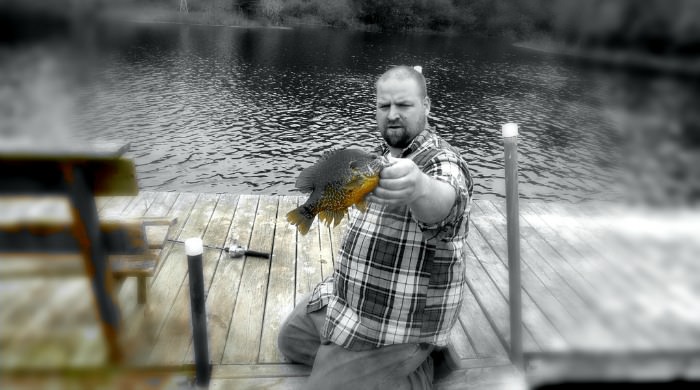 Dock fishing at a private pond for bluegill in Wisconsin.
Where To Fish For Bluegills
Bluegills can be found in nearly all types of freshwater environments, nearly everywhere. They roam around in many ponds, lakes, reservoirs, rivers, streams, sloughs and creeks. They most often run in tightly packed schools of about 20 to 30 fish. So, when you catch one or two, you can expect to start catching a whole lot more in the same area.
Bigger sized bull bluegills will tend to stray away from the larger schools. They can often be found in or near some of the same places as the smaller bluegills, but will often be found scattered about holding on isolated stumps and humps, out deeper and outside of weed lines out deeper. Many inexperienced anglers will overlook the opportunity of catching some big slabs by fishing out deep because they associate bluegill mostly in shallow water environments.
After you have reached your favorite freshwater fishing spot, where should you fish for them? One of the surest places would be around boat docks. More than likely there should often be a few bluegill holding underneath or around the edges of them. Other easy spots would be along weed lines, brush and other types of structure.
Bluegill Fishing Tackle
What do you need when fishing for bluegill? Light to ultra light tackle will provide best results. A short 5 to 6 foot graphite spinning rod and reel, with 2, 4 or 6 pound monofilament line, smaller scaled micro sized lures, or just simply a worm baited on size #6, #8 or #10 hook, and a small slip float or bobber. This set up is what I often use, and it should be great to get you started.
More Advantages Of Bluegill Fishing
Another cool thing about fishing for bluegill is that largemouth bass can usually be found nearby. Not only do largemouth bass prey and feed on bluegill, they tend to occupy the same environments. So, unless I'm solely targeting bluegill or even other panfish, sometimes I'll break out my bass gear and start casting for the black bass too. It can be a great way to stir up the action a bit.
Check out our bluegill fishing tips for more advanced helpful info.

NEW Merch Available Now!

Recent Articles


-
Monster Trinity River Alligator Gar
Sep 21, 23 11:30 AM
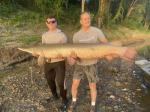 Great Father and son day on the Trinity River in Palestine, Texas July 16, 2023. My son, Air Force Lieutenant Andrew Jordan Grove landed this 218lb, 7
 -
Spinner Bait Fishing For Pike And Caught This Lunker
Jul 22, 23 05:10 PM
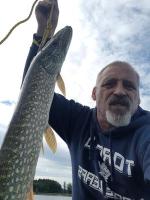 Spinner bait fishing for pike and caught this lunker at Valens Lake in Ontario, Canada.
 -
Sacramento Delta “Top Water Action”
Jul 22, 23 04:45 PM
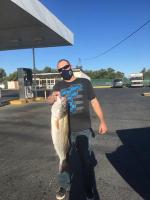 My name Is D.C. My backyard resides on the East Sacramento Delta. Anyhow, I was throwing a 9 inch Cotton Cordell Pencil Popper (red and white in color).
Facebook Comments
Leave a comment, question or tip in the box below.