How To Catch Striped Bass
For Freshwater Fishing
Fishing for stripers can be somewhat challenging at times. Understanding how to catch striped bass will allow for times better well invested on the water. Often, beginner anglers aren't truly aware why they can't seem to catch these elusive predators.
Many beginner fishermen can spend an entire day without catching one striper. Sure, they may get lucky every now and then, but not as often as any angler would like to. Even so, they may catch a small schoolie here and there, along with an occasional cow. And granted, it's always a blessing to have a little luck on our side...
Wouldn't you also like to obtain
the skills to coincide with luck? Well, allow me to go over a few striper
fishing tips that will help with how to
catch striped bass more often on a consistent basis.
Striped Bass Tackle
What kind of equipment should I use if I expect to figure out how to catch striped bass? Well, you should to take into consideration the size of the stripers that roam the water you'll be fishing at, and the size of bait or lures you expect to be using.
Basically a 7'-8' medium to heavy action spinning rod and
reel, spooled with 14 pound test monofilament line, and rigged with
4/0-6/0 circle hooks or octopus barbed hooks will be efficient. I would
also like to recommend a baitcasting rod and reel for a second outfit.
Striped Bass Feeding Patterns
Understanding the stripers feeding patterns and their habits is important to know if you expect to have much success catching them.
Stripers are always on the move and most often travel in fairly large schools together. However, they don't necessarily follow a strict pattern. This makes it even more difficult for a beginner fishing from the bank, especially during the day. Why? Because striped bass mainly feed during limited daylight times.
Stripers most actively feed at dusk, dawn and throughout the night. They will feed somewhat throughout the day as well, however, not quite as often.
They often feed at the surface during the spring and fall, and generally lurk in shallow water. They roam in deeper water during the warmer summer months. And stay much closer to the surface during cold winter times.
Stripers will feed in spurts lasting merely a few minutes. Once they have quickly engorged themselves, they immediately head down into deeper water. One minute they're right there, and gone the next. So keep your eyes peeled for swarms of birds diving in and out of an area of water. More than likely, they are picking off bait fish, and the stripers should be right there as well.
The Striped Bass Diet
Shad are stripers favorite bait fish to feed on in freshwater impoundments. They also feed on minnows, smelt and ship jack, just to name a few.
It's an awesome sight to see when the bait fish have been
pushed to the surface as the stripers attack them in an intense feeding
frenzy. This is known as "boiling" because it looks as if the water is
actually boiling.
Striper Fishing Techniques
Start plugging your top-water lures when the stripers are busting the surface. Quickly start casting out toward them and enjoy the moment.
It won't last long though. Be sure to have another rod rigged up with a subsurface lure, such as a swimbait or crankbait. Once they stop hitting on top, start tossing the swimbait. This is one of the funnest ways of how to catch striped bass.
Ultimately, locating the striped bass is key. Using sonar electronics will obviously be very beneficial. Regardless, stripers will be roaming deeper in warm water temperatures. This is an excellent time to troll for them. Lures or fresh shad will be great. And if you can get right on top of them, start jigging with spoons.
See more detailed information about striped bass techniques.
Best Times and Places To Find Stripers?
When are the best times to really know how to catch striped bass?
- Early mornings,
- late evenings,
- and throughout the night.
They like fast moving water as that provides much oxygenation for them to thrive.
- So, look for heavy current in mouths of fast moving rivers and streams.
- Also, about two hours before high tide.
- Right before and after a storm front.
- Windy days when the water is choppy.
- And when there is very little to no moonlight.
Do you have any pictures of your catch? Or a cool fishing adventure to tell? Share your striped bass pictures and check out the stories others have contributed.

NEW Merch Available Now!

Recent Articles


-
Monster Trinity River Alligator Gar
Sep 21, 23 11:30 AM
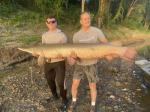 Great Father and son day on the Trinity River in Palestine, Texas July 16, 2023. My son, Air Force Lieutenant Andrew Jordan Grove landed this 218lb, 7
 -
Spinner Bait Fishing For Pike And Caught This Lunker
Jul 22, 23 05:10 PM
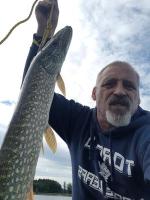 Spinner bait fishing for pike and caught this lunker at Valens Lake in Ontario, Canada.
 -
Sacramento Delta “Top Water Action”
Jul 22, 23 04:45 PM
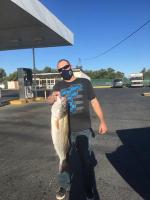 My name Is D.C. My backyard resides on the East Sacramento Delta. Anyhow, I was throwing a 9 inch Cotton Cordell Pencil Popper (red and white in color).
Facebook Comments
Leave a comment, question or tip in the box below.